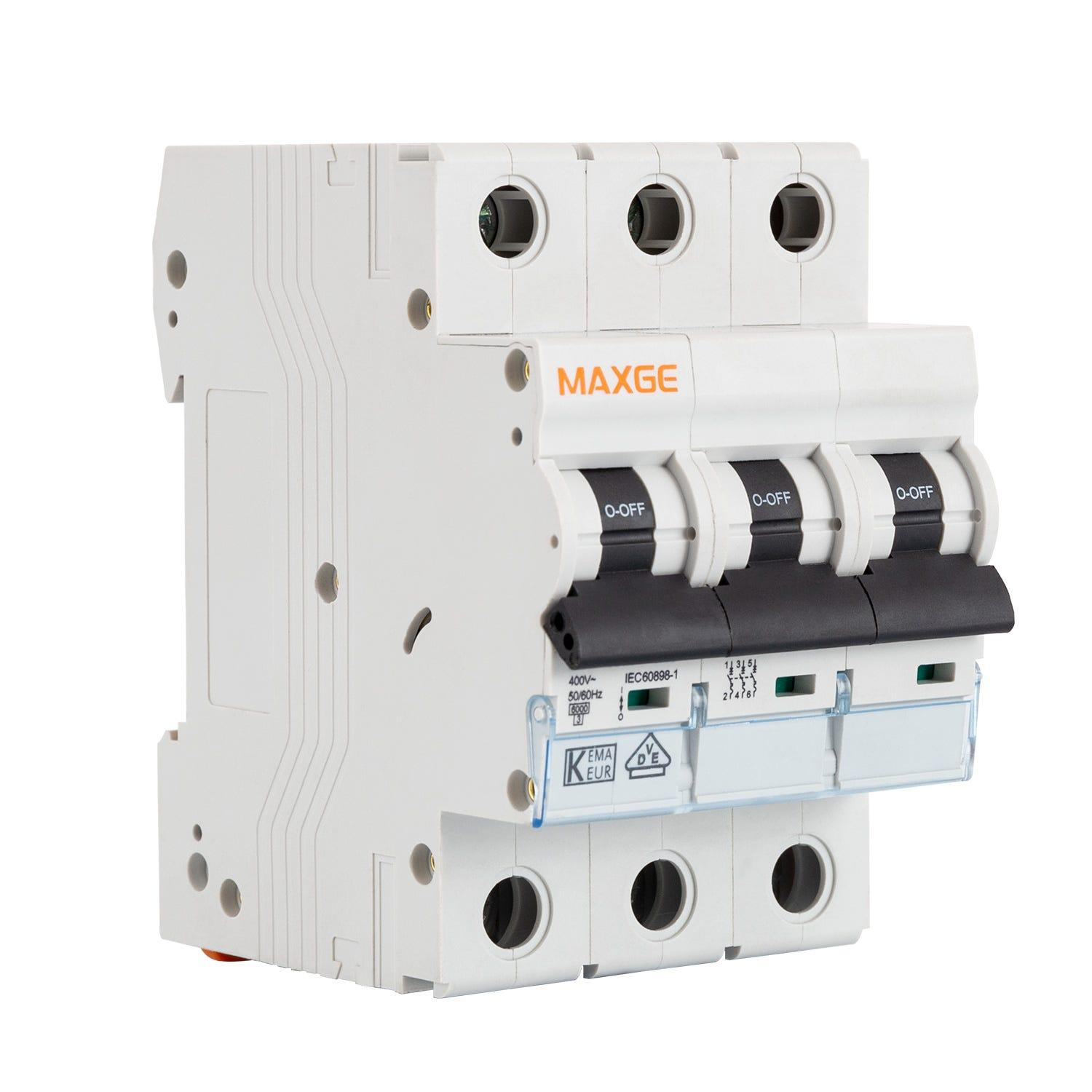
Circuit breakers are essential components in electrical distribution systems, protecting circuits from overloads and short circuits. However, like other electrical control products, they are not designed to operate indefinitely without inspection or replacement. When a breaker shows signs of wear, repeated tripping, or other abnormal behavior, replacing it with a suitable product can help maintain reliable circuit protection.
For installers, electrical contractors, distributors, and equipment professionals, selecting the correct breaker is just as important as knowing when replacement is necessary. Understanding the application, rated current, pole configuration, and installation requirements can make the replacement process more efficient and dependable.
Signs That a Circuit Breaker May Need Replacement
A circuit breaker that trips occasionally may simply be responding correctly to an overload or short circuit. Repeated or unexplained tripping, however, deserves closer attention. If a breaker trips even when the connected load appears normal, the underlying issue may involve the circuit, the connected equipment, or the breaker itself.
Visible signs can also indicate that replacement is appropriate. Discoloration, damaged terminals, unusual heat, a loose operating mechanism, or physical cracks should not be ignored. A breaker that cannot be switched smoothly or does not remain reliably in the ON position may also require inspection.
Age and operating conditions are additional considerations. Frequent switching, high ambient temperatures, dust, moisture, and demanding electrical loads can affect equipment over time. Rather than replacing a breaker based solely on age, qualified personnel should evaluate its operating condition and the requirements of the electrical installation.
Choosing the Right Miniature Circuit Breaker
Selecting a replacement is not simply a matter of choosing a breaker with the same appearance. The electrical characteristics of the original installation need to be considered carefully.
A miniature circuit breaker is commonly used for terminal circuit protection against overload and short-circuit currents. Its compact modular structure makes it suitable for distribution applications in residential, commercial, and general industrial environments. MAXGE offers a range of miniature circuit breaker products designed for different terminal distribution requirements.
Pole configuration is another important factor. A miniature circuit breaker single pole is generally associated with single-phase circuit arrangements where one conductor requires protection and switching. A 2 pole miniature circuit breaker can be used where two conductors need to be disconnected together. For three-phase applications, a 3 pole miniature circuit breaker can provide coordinated switching and protection across three conductors.
The correct configuration should always be determined according to the electrical system, wiring arrangement, applicable standards, and project specifications. Using a breaker with an unsuitable pole configuration or electrical rating can compromise the intended protection of the circuit.
Why Professional Installation Matters
Replacing a circuit breaker involves more than removing an old device and installing a new one. Electrical panels can contain hazardous voltages, and incorrect wiring or improper terminal connections may create serious safety risks.
A qualified electrician can first identify why the existing breaker is being replaced. If repeated tripping is caused by excessive load, damaged wiring, or a fault in downstream equipment, simply installing a new breaker may not resolve the problem.
Professional installation also helps verify compatibility. The replacement breaker should match the required rated current, voltage, breaking capacity, pole configuration, mounting arrangement, and other relevant specifications. Terminal connections should be made according to the manufacturer’s requirements to support secure electrical contact.
For projects involving multiple circuits or larger distribution systems, consistent product selection is particularly important. Standardized electrical control products can simplify installation, maintenance, replacement, and inventory management across different applications.
Considering MAXGE for Electrical Control Products
When sourcing circuit protection equipment, product range and technical compatibility are important factors. MAXGE provides electrical control products covering MCB, RCD and RCBO, MCCB, ACB, smart breakers, new energy devices, distribution boxes, and industrial devices. This range allows different levels of circuit protection and distribution requirements to be addressed within one product portfolio.
Within its MCB range, MAXGE provides models such as the EPB-63H, EPB-63M, EPB-63Me, EPB-63Ne, EPB-63Se, and other miniature circuit breaker products for terminal power distribution applications.
For applications that require additional functionality, MAXGE also provides MCB accessories and modular contactor products. These can support functions such as status indication, remote control, fault alarms, and other distribution requirements depending on the selected configuration.
Before ordering, it is useful to provide the application conditions, required ratings, pole configuration, installation environment, and relevant technical requirements. This gives the supplier a clearer basis for recommending a suitable product.
Making Circuit Breaker Replacement More Reliable
A circuit breaker should be treated as part of the overall electrical protection system rather than as an isolated component. When replacement is necessary, identifying the cause of failure, confirming the technical requirements, and selecting a compatible product are important steps. Rated current, voltage, breaking capacity, pole configuration, installation dimensions, terminal arrangement, and protection characteristics should all be checked against the existing system before replacement.
For professionals selecting electrical control products for distribution and protection applications, reviewing technical specifications and application requirements can help reduce compatibility issues and unnecessary replacement work. MAXGE develops low-voltage electrical solutions covering different protection and distribution needs, with its portfolio also extending to electrical protection for PV, energy storage, and EV charging systems. This broader product coverage can support replacement decisions where the new device needs to fit into an existing low-voltage protection strategy.
MAXGE combines product development with smart manufacturing and automated production at its Deqing and Wuhu manufacturing bases, with more than 90% automation in its production operations. Its R&D team, patented technologies, software copyrights, CNAS-related laboratory resources, and international certifications provide additional support for product development and testing. For product specifications, replacement requirements, or electrical protection solutions for a specific application, you can contact MAXGE directly.
