For industrial manufacturers, producing metal components that can withstand extreme environments, intense mechanical stress, and rigorous operational demands is a constant engineering challenge. Traditional subtractive manufacturing methods—while reliable for many applications—often impose significant constraints when complex geometries, advanced material properties, and rapid development cycles are required. This is where Selective Laser Melting (SLM) technology has fundamentally changed the landscape of metal fabrication.
How exactly does SLM 3D printing support the production of these high-performance metal components? Much of this advantage stems from its capacity to deliver broad design flexibility alongside refined material control, making it a compelling solution for demanding B2B sectors including aerospace, automotive, energy, and medical device manufacturing.
Overcoming Traditional Geometric Constraints
The primary advantage of slm 3d printing is its layer-by-layer additive process. Unlike machining, which removes material from a solid block and is limited by tool access, SLM builds parts directly from digital CAD models by melting fine metal powders with a high-powered laser. This fundamental difference unlocks unprecedented design freedom.
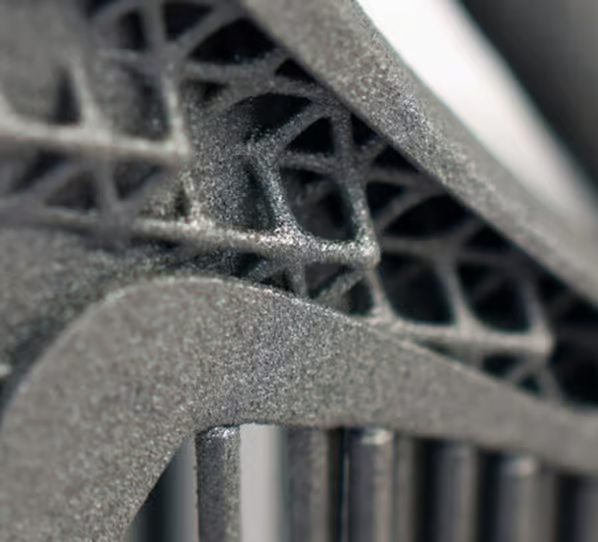
Engineers are no longer restricted by the limitations of traditional casting or milling. They can design components with intricate internal channels, complex lattice structures, and organic, topology-optimized shapes. For high-performance parts, this means manufacturers can achieve significant weight reduction without compromising structural integrity.
Consider the aerospace and automotive sectors, where lightweighting is critical for fuel efficiency and performance. SLM technology can produce lightweight components that deliver stiffness comparable to or exceeding that of parts made via conventional manufacturing routes, depending on design optimisation and material selection. Furthermore, complex assemblies that previously required multiple parts and fasteners can often be consolidated into a single, unified component. This part consolidation reduces assembly time, minimizes potential points of failure, and enhances overall system reliability.
Achieving Superior Material Properties
The performance of a metal component is inherently tied to its material properties. SLM technology is highly versatile, supporting a wide array of industrial-grade metal powders, including titanium alloys, nickel-based superalloys, stainless steel, and high-strength tool steels.
The SLM process involves rapid heating and cooling cycles as the laser melts the powder. When tightly controlled, The rapid heating and cooling cycles in SLM influence the microstructure and mechanical properties of printed metals. With appropriately qualified process parameters and post-processing, manufacturers can achieve high-density components with application-specific mechanical performance.
However, properties may vary with build orientation, material composition, heat treatment, and testing conditions.In many cases, the tensile strength and hardness of SLM-printed parts match or even surpass those of cast or forged metals.
For industries operating in harsh environments, such as oil and gas or power generation, the ability to print complex geometries using specialized materials like Inconel or specific titanium alloys is invaluable. These materials offer excellent heat and corrosion resistance, ensuring that critical components maintain their integrity under extreme pressure and temperature conditions.
Enhancing Thermal Management and Fluid Dynamics
One of the most practical applications of SLM technology in high-performance manufacturing is the integration of conformal cooling channels. In mold manufacturing, for example, traditional cooling channels are typically straight lines drilled into the mold, which often results in uneven cooling and longer cycle times.
SLM allows for the creation of cooling channels that conform precisely to the contours of the molded part. This optimized thermal management significantly improves cooling efficiency, reduces thermal stress on the mold, extends tool life, and shortens production cycle times. Similarly, in heat exchangers and fluid flow applications, SLM enables the design of curved ducts and intricate internal structures that optimize fluid dynamics and maximize energy conversion efficiency.
Accelerating the Development Cycle
In today’s competitive industrial landscape, speed to market is critical. Traditional manufacturing often requires long lead times for tooling, mold creation, and initial setups. SLM 3D printing bypasses many of these steps, allowing manufacturers to move rapidly from a digital concept to a functional physical prototype.
This rapid design verification process is crucial for engineering teams. It allows for fast, iterative testing of new designs, materials, and complex structures. Engineers can produce test parts, evaluate their performance, make necessary adjustments to the CAD model, and reprint the component in a fraction of the time required by conventional methods. This agility not only accelerates product development but also reduces the financial risk associated with bringing new, high-performance components to market.
Implementing the Right Technology: Equipment Considerations
To fully realize the benefits of metal additive manufacturing, selecting the appropriate equipment is paramount. Industrial applications require printing systems that can maintain process stability, ensure precise laser control, and provide consistent part quality over extended production runs.
Companies like LiMN 3D, a specialized provider of metal additive manufacturing solutions, understand these rigorous B2B requirements. They develop equipment designed to address the specific challenges of producing complex metal parts for demanding sectors.
For example, when evaluating a 3d metal printer, manufacturers must look closely at system specifications that dictate precision and reliability. Key considerations include the scanning speed, the quality of the optical system, and the precision of the layer deposition process. A robust system will typically offer variable powder layering thicknesses—often ranging from 20μm to 120μm—allowing operators to balance the need for high-resolution detail against production speed.
Furthermore, advanced industrial printers incorporate features crucial for process stability, such as intelligent temperature control, ultra-clean filtration systems to manage the printing environment, and real-time monitoring capabilities. These features ensure that the oxygen levels within the build chamber remain strictly controlled (often below 100ppm) and that the laser processing environment is stable, which is essential for achieving consistent melting and reliable part density.
The Future of High-Performance Manufacturing
The integration of SLM technology is reshaping how industries approach the design and production of critical metal components. By removing traditional manufacturing constraints, offering broad material compatibility, and accelerating the development cycle, metal 3D printing provides a pathway to creating lighter, stronger, and more efficient products.
As engineers continue to explore the possibilities of additive manufacturing, the reliance on advanced SLM systems will only grow. For businesses aiming to stay at the forefront of innovation, understanding and leveraging this technology is no longer just an option; it is becoming a fundamental requirement for success in high-performance industrial manufacturing.
