A road cyclist and a mountain biker may both spend hours in the saddle, but the demands placed on their clothing can be quite different. A smooth stretch of asphalt calls for steady pedaling, an efficient riding position, and clothing that stays comfortable at a consistent cadence. On a mountain trail, the rider may spend more time standing, climbing over uneven ground, descending, and moving the upper body to react to changing terrain.
That difference explains why bib shorts designed for road riding are not necessarily the best choice for every off-road cyclist. The two styles can look similar at first glance, but their fit, fabric, chamois construction, storage, and durability can be designed around very different riding conditions. For cyclists who spend most of their time on paved roads, understanding those differences can make choosing road cycling bib shorts much easier.
How Road And MTB Bib Shorts Differ
The biggest difference comes from how the rider moves. Road cycling generally involves a relatively consistent seated position, especially during longer training rides or endurance sessions. Riders often lean forward over the handlebars and maintain a steady cadence for extended periods.
Mountain biking is less predictable. A rider may shift from sitting to standing repeatedly, absorb impacts through the legs, and move the body backward or forward on steep sections. The clothing therefore needs to accommodate more movement and, depending on the discipline, more contact with rough surfaces.
Road-oriented bib shorts tend to prioritize a close, streamlined fit. Przewalski Cycling describes its road collection as being designed around speed, efficiency, lightweight construction, a close fit, compression, and stable garment support. The company’s road range is positioned for training, climbing, and longer efforts on paved roads.
MTB bibs, by comparison, often place greater emphasis on durability and freedom of movement. Przewalski’s Men’s MTB Racing Bib Shorts, for example, use a four-way stretch fabric and are designed for climbs, descents, and technical trail movement. The product also includes side pockets, a feature that can be particularly useful when riding away from paved roads.
Why Road Riders May Prefer A Road-Specific Fit
For a road cyclist, clothing that remains stable in a forward-leaning position can make a noticeable difference over several hours. Excess fabric may create folds, while an unstable chamois can require repeated adjustment. A close fit can reduce unnecessary movement and help the garment work with the rider rather than against them.
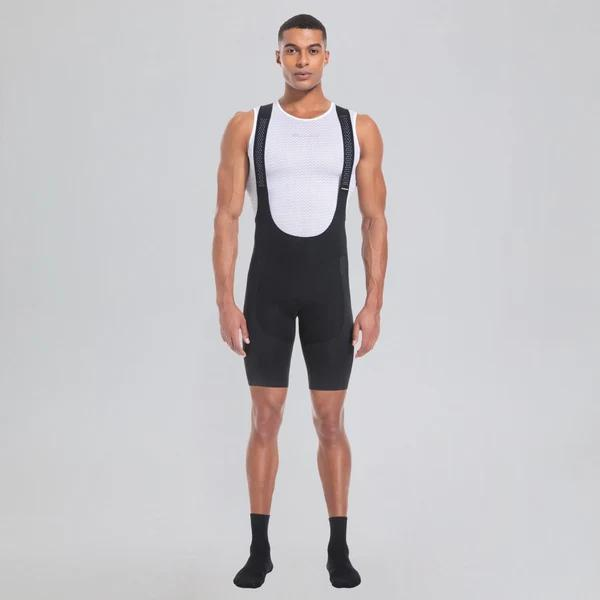
The current Men’s Road Cycling Bib Shorts use a 3D dynamic cycling cut intended to reduce excess folds and restriction in riding positions. The product also uses 230 g/m² medium-high compression fabric with 120% lengthwise stretch and 130% crosswise stretch, giving the garment a close fit while allowing movement.
The chamois is another important consideration. Road riders often spend long periods seated, so consistent support around the sit bones can become more important than simply having thick padding. This road model uses an endurance chamois with 14 mm sit-bone support and a 120 kg/m³ high-rebound sit-bone zone. The product is specified for rides of up to eight hours or 700 km.
Those specifications do not mean every road cyclist needs an eight-hour endurance pad. Someone riding for an hour after work may have very different requirements. They do show how road-specific construction can focus on sustained seated riding rather than frequent body movement over rough terrain.
When MTB Bibs Make More Sense
A mountain biker’s priorities change once the road disappears. Rough surfaces can introduce repeated vibration, while technical climbs and descents require frequent changes in body position. Durability and compatibility with protective equipment can therefore become more important than having the most streamlined possible silhouette.
Przewalski’s Men’s MTB Racing Bib Shorts use 72% nylon and 28% elastane four-way stretch fabric, with a design intended for frequent mountain and gravel riding. The product includes a high-density chamois using 120+30 kg/m³ foam, a three-layer mesh chamois surface, two covered side pockets, 4.5 cm cross-back bib straps, and 5 cm anti-slip leg openings.
The pockets are a particularly practical difference. On a road bike, riders often rely on jersey pockets, a saddle bag, or other road-specific storage. On a mountain bike, having essentials within reach on the bibs can be convenient when stopping is less desirable.
The MTB design also leaves the knees free for protective pads, which suits riders who use additional protective equipment on technical terrain.
Which Bib Shorts Should Roadies Choose?
For riders primarily on paved roads, road-specific bibs are the most logical choice, engineered for a stable seated position, steady pedaling, and sustained effort during training, climbing, or endurance rides.
Conversely, cyclists navigating mixed terrain—from asphalt to gravel and technical trails—benefit from the four-way stretch, durability, and storage of MTB-oriented bibs. Selecting the right road cycling bibs ultimately depends on your actual riding position, terrain, and movement needs rather than pad thickness alone.
A Road-Focused Bib Shorts Option
Przewalski Cycling currently offers road, gravel, mountain biking, and long-distance bib shorts as part of its wider cycling apparel range. Its road-focused model combines a close 3D cycling cut, medium-high compression fabric, endurance chamois, silicone leg grippers, and reflective details for riders who spend extended time on paved roads.
For roadies, the right bib shorts do not need to be the most specialized garment on the market. They simply need to match the demands of the ride. When most of your miles are spent on pavement, choosing clothing built around that riding position can make long training sessions and everyday road rides feel more settled from the first mile to the last.
