Pressure-sensitive adhesives (PSAs) are widely used in industrial products, including tapes, labels, protective films, and assembly materials. As adhesive manufacturers explore more sustainable formulation options, selecting suitable resin ingredients has become an important consideration. A bio-based tackifier provides a renewable resin option that helps formulators balance tack, compatibility, and processing requirements.
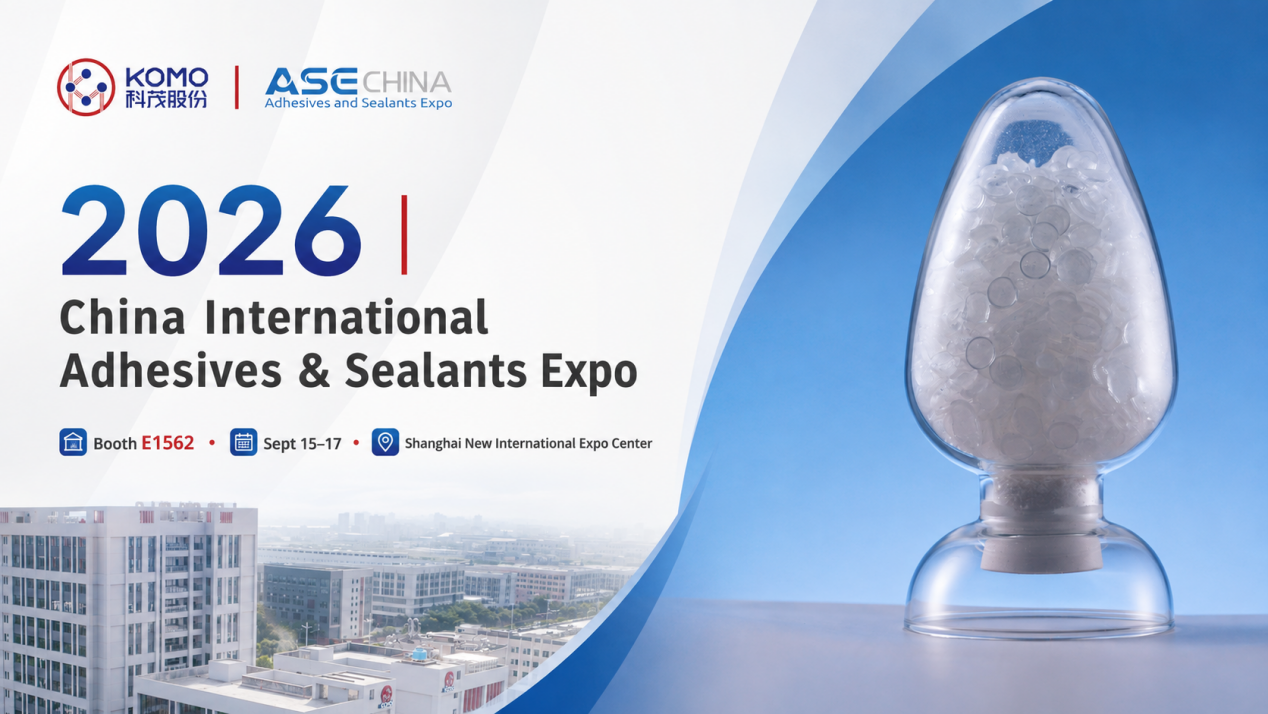
As an upstream rosin resin supplier, KOMO develops bio-based tackifying resin materials derived from pine-based resources for industrial adhesive formulations. At China Adhesives Expo, KOMO will present its rosin-based resin solutions at Booth E1562, offering opportunities for industry professionals to discuss sustainable material development.
The Role of Tackifying Resin in Sustainable PSA Formulations
A tackifying resin is an important component in many PSA systems. While the base polymer provides the main adhesive structure, the tackifier helps modify the interaction between polymer chains and the adhesive surface. This interaction can influence initial tack, peel adhesion, flexibility, and overall formulation balance.
For PSA formulators, resin selection requires consideration of several technical factors. These include compatibility with the polymer system, softening point, molecular structure, color requirements, and thermal stability. A suitable resin choice depends on the complete formulation rather than a single performance indicator.
Rosin-based tackifiers are widely evaluated in adhesive applications because their chemical structure can be modified to meet different formulation needs. Through processes such as esterification, hydrogenation, and stabilization, rosin can be converted into functional resin materials with adjusted properties.
How Bio-Based Tackifier Supports Sustainable Adhesive Development
A bio-based tackifier is produced from renewable biological resources rather than relying only on petroleum-derived raw materials. KOMO’s rosin resin materials originate from pine oleoresin and are refined and modified into functional resin ingredients for downstream applications, including adhesive systems.
For adhesive manufacturers, bio-based resin selection involves evaluating both environmental considerations and technical requirements. A renewable resin source alone is not enough. Formulators also need to consider whether the resin provides suitable compatibility, processing behavior, and performance within their specific adhesive system.
KOMO’s bio-based tackifier product series is developed as a resin ingredient for adhesive formulation applications. The product positioning focuses on providing a rosin-based material option that allows manufacturers to evaluate renewable content while maintaining the formulation characteristics required for industrial use.
Choosing the Right Tackifying Resin for PSA Applications
Different PSA systems require different resin characteristics. When selecting a tackifying resin, formulators usually evaluate several key parameters.
Polymer Compatibility
Compatibility between the tackifier and polymer matrix directly affects adhesive behavior. A resin that interacts effectively with the polymer system can help achieve a balanced relationship between tack and cohesion.
For example, rosin ester tackifiers are commonly used in hot melt, water-based, and solvent-based PSA systems. KOMOTAC rosin ester products are described as tackifier materials made from refined gum rosin through processes including hydrogenation, esterification, and stabilization, with applications in various PSA systems.
Softening Point and Thermal Behavior
Softening point is another important specification when evaluating resin materials. It influences processing conditions and the behavior of the final adhesive formulation under different temperature conditions.
Different PSA applications may require different softening point ranges depending on production methods, application temperature, and end-use requirements. Therefore, resin selection should be based on formulation testing and application needs.
Color and Stability Requirements
For applications where appearance matters, such as transparent films or light-colored adhesive products, resin color can also influence material selection.
Modified rosin materials can be developed with controlled color and improved stability characteristics through chemical modification processes. These factors allow formulators to select materials according to the requirements of specific adhesive applications.
KOMO Bio-Based Tackifier for Sustainable PSA Development
KOMO provides rosin-based resin materials as upstream ingredients for industrial formulators. Instead of supplying finished adhesives, KOMO focuses on developing resin components that adhesive manufacturers can incorporate into their own formulations.
The company’s bio-based tackifier is designed for customers evaluating renewable resin options for sustainable PSA development. By supplying rosin-derived resin materials, KOMO supports adhesive manufacturers in exploring formulation approaches based on natural resources.
KOMO’s product portfolio includes different rosin resin categories, such as esterified rosin, hydrogenated rosin, and other modified rosin materials. These materials are developed for applications where resin properties such as compatibility, stability, and formulation adaptability are important considerations.
Visit KOMO at China Adhesives Expo Booth E1562
China Adhesives Expo brings together companies involved in adhesives, sealants, tapes, films, raw materials, and related technologies. The event provides a platform for industry professionals to exchange information about formulation trends and material solutions.
At Booth E1562, visitors can discuss KOMO’s bio-based resin materials, including tackifying resin options for adhesive formulation development. The exhibition provides an opportunity for R&D teams, procurement professionals, and adhesive manufacturers to learn more about rosin-based materials and their potential applications.
As demand for sustainable materials continues to influence industrial formulation strategies, bio-based resin ingredients are becoming an important area of evaluation. Through rosin-based tackifying resin solutions, KOMO works with downstream manufacturers to support the development of adhesive systems using renewable material resources.
