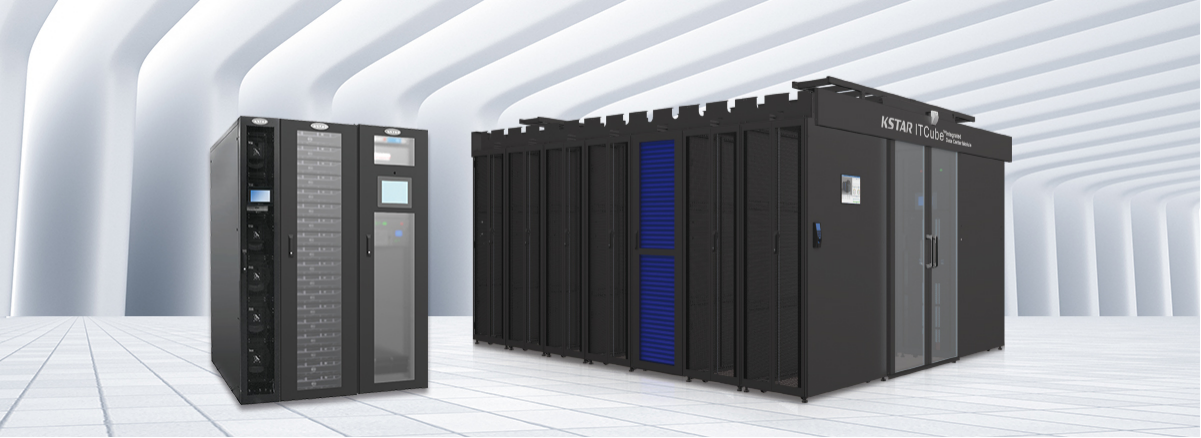
As digital workloads become more distributed, organizations are reassessing how data center infrastructure should be designed, delivered, and expanded. Traditional construction can involve long development cycles and extensive on-site coordination, while newer approaches aim to reduce deployment complexity. Modular and prefabricated data centers are often discussed together, yet they describe different characteristics. Understanding the distinction can help technical and procurement teams determine which approach better matches project requirements, site conditions, and future capacity plans.
What Makes a Data Center Modular?
A modular data center is organized around standardized infrastructure units that can be deployed, combined, or expanded according to operational requirements. Rather than treating the entire facility as one fixed structure, the architecture divides key functions into coordinated modules.
Depending on the project, these functions can include UPS systems, batteries, power distribution, cooling, racks, monitoring, and other supporting infrastructure. The configuration can be adjusted according to required IT capacity, available space, redundancy expectations, and expected growth.
Modularity is therefore closely associated with flexibility. A company can establish an initial infrastructure capacity and add compatible units when computing demand increases. This can be particularly useful when workload forecasts are uncertain or when infrastructure needs to be deployed in stages.
The approach can also improve consistency across multiple locations. Standardized configurations make it easier to repeat engineering principles, documentation, maintenance procedures, and technical training from one facility to another.
The Role of Prefabrication in Data Center Projects
Prefabrication focuses less on how the infrastructure is expanded and more on how it is assembled before reaching the final site. Instead of carrying out all major integration work at the deployment location, components and systems can be assembled in a controlled manufacturing environment.
Power equipment, cooling systems, racks, distribution components, cabling, and other infrastructure can be integrated before shipment. Site work is still required, including placement, connection, commissioning, and final testing, but a greater share of the physical assembly is completed before delivery.
This can reduce the amount of construction activity required at the site. It may also create a more consistent production environment for assembly and quality checks, which can be valuable when project schedules are tight or local construction conditions are difficult.
A KSTAR data center architecture can incorporate this type of integrated thinking by bringing critical power and environmental infrastructure into a coordinated deployment model. The distinction is important, however: prefabrication describes a delivery and manufacturing method, while modularity describes an architectural and scalability concept.
Where Modular and Prefabricated Approaches Overlap
The two approaches should not be viewed as competing alternatives in every project. A data center can be modular and prefabricated at the same time.
For example, a solution may be divided into standardized power, cooling, and IT infrastructure modules while those modules are assembled and integrated in a factory before reaching the customer site. In this case, modularity determines how the system is structured, while prefabrication determines how much of the integration happens before delivery.
This combination can offer advantages during both initial installation and later expansion. Factory integration can reduce on-site assembly, while modular architecture can provide a more structured pathway for adding capacity or reconfiguring infrastructure.
For projects where a significant portion of deployment work needs to be completed before delivery, a prefabricated data center solution can provide a practical manufacturing and installation model. Its long-term scalability, however, still depends on the underlying architecture.
How the Deployment Process Changes
Traditional data center construction often requires different equipment to arrive at the site separately. Multiple contractors may then handle electrical installation, cooling, rack deployment, connections, and testing according to different schedules.
Prefabrication can shift more of these activities to the factory. This may reduce the number of installation steps performed at the final site and make the deployment sequence more structured.
Modularity contributes differently. Its main benefit becomes more evident when the organization needs to modify or expand the infrastructure after initial commissioning. Standardized modules can provide a clearer framework for capacity additions, provided that power, cooling, distribution, and physical space have been designed with future growth in mind.
The combination of both methods can therefore reduce initial site complexity without giving up the possibility of future adjustment.
Scalability Is a Key Difference
Modularity has a more direct relationship with scalability. Because the infrastructure is structured around defined units, organizations can plan expansion according to workload growth and available investment.
Prefabrication alone does not guarantee this flexibility. A factory-built data center can still be designed as a fixed-capacity installation. Its primary benefit is the relocation of more assembly and integration work from the site to the factory.
This distinction matters when organizations develop procurement specifications. A project focused mainly on rapid and controlled installation may emphasize prefabrication, while a project expecting significant capacity growth may place greater emphasis on modular architecture.
For many modern deployments, the two characteristics can provide complementary value rather than forcing buyers to choose only one.
Power, Cooling, and IT Capacity Must Work Together
Regardless of the deployment method, supporting infrastructure must be aligned with the computing environment. Increasing IT density affects electrical demand and heat generation, making power protection and thermal management important parts of capacity planning.
UPS systems, batteries, distribution equipment, cooling infrastructure, racks, and monitoring should therefore be evaluated as an integrated system. A modular architecture is only effective when each module can work within the wider infrastructure without creating new compatibility issues.
This system-level approach is particularly relevant for compact or distributed facilities. Limited space can make equipment placement, airflow organization, maintenance access, and future expansion more difficult if they are not considered during the initial design.
What Should Buyers Evaluate?
Procurement teams should begin with the project’s actual operating requirements. Current and projected IT load, rack density, redundancy targets, available space, cooling conditions, installation restrictions, monitoring, and maintenance access all influence the appropriate architecture.
Future expansion should receive particular attention. Buyers need to determine whether additional capacity can be introduced without major redesign and whether the supporting power and cooling systems can scale at the same time.
Lifecycle economics also matters. Initial installation speed is useful, but long-term costs can be affected by energy consumption, maintenance, replacement procedures, and future capacity additions.
Organizations with multiple facilities should also assess the value of standardization. Repeating a common infrastructure architecture can simplify technical training, maintenance practices, documentation, and spare-parts planning across different locations.
Selecting the Right Combination for Modern Deployment
Modular and prefabricated data centers represent two related but distinct approaches. Prefabrication focuses on completing more assembly and integration in a controlled factory environment, while modularity provides a structured way to organize infrastructure and accommodate future changes in capacity.
When these characteristics are combined, container data center solutions can support a deployment model that reduces on-site complexity while providing a framework for scalable infrastructure. The most appropriate choice depends on the project’s location, workload, installation conditions, capacity requirements, and long-term expansion plans.
