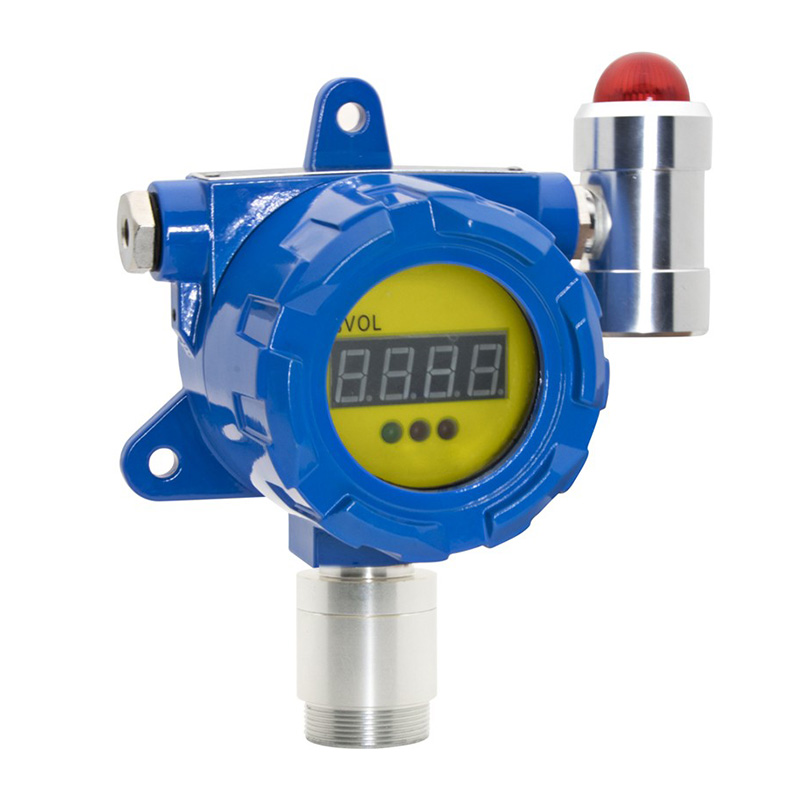
A carbon dioxide reading that stops at the top of the scale points to a different service problem than a normal reading taken at the wrong spot. The first calls for a review of the instrument’s range. The second calls for a review of where the air sample came from. For a marine gas detector, the repair brief needs to address both.
A service visit can start by tracing the reading back to the compartment, the task in progress, and the conditions at the time. A measurement at an open access hatch describes the air reaching that point. Establishing whether it represents the work area requires knowing the route the air takes between the two locations.
Check the Range Against the Job
A display that repeatedly reaches its upper limit gives the technician an immediate clue about the range to investigate. The configured range of a marine gas detector determines which concentrations it can report. If a channel tops out during the event that prompted the service call, the record may establish that its upper limit was reached while leaving the peak unresolved.
A marine CO₂ detector measures carbon dioxide on a dedicated channel. The ship’s equipment list may describe a unit by the number of gases it measures, so the technician needs to match the installed sensors to the gas list for that compartment. The oxygen channel answers a separate question about the available oxygen in the same air.
Alarm settings also need a separate check. The measurement range governs which concentrations can be displayed, while the alarm settings govern when the instrument signals. A higher full-scale value can give the service team room to observe a peak, but the proposed channel still needs suitable performance around the concentrations that drive decisions onboard. The retest sheet needs the gas, unit, range, and approved alarm setting.
Follow the Air Through the Compartment
Air can move freely at a hatch while machinery or partitions restrict circulation farther inside. In a cargo hold, an obstruction can separate the sampling point from the area being investigated. In a pump room, the location of a possible release and the route to an exhaust opening may be more useful starting points than a measurement made at the doorway.
A marine CO₂ detector records what reaches its inlet or probe. On a service drawing, that makes each marked sample point meaningful only alongside the condition of the space. A bilge check may include low points, while a hold or tank may call for samples at several levels or in separate areas. The ship’s procedure determines the locations and conditions required for the test.
Where the approved procedure calls for sampling from outside a compartment, a compatible probe and hose can bring air from selected points to a pumped instrument. The Bosean K-600 Marine pairs pumped sampling with separate nondispersive infrared sensors for carbon dioxide and methane and electrochemical sensors for oxygen, carbon monoxide, and hydrogen sulfide. The sample still represents the position of the probe tip.
Account for Travel Time in the Hose
A reading can arrive late even when the instrument responds promptly to gas at its sensor. The pump first moves air from the probe through the hose, and the sensor then needs time to respond. A longer line can extend the first part of that interval, while a restricted filter can alter the flow on which the sampling arrangement depends.
The hose connected to a marine CO₂ detector is part of the setup to verify after service. A loose joint can admit surrounding air and dilute the sample. Checking the complete arrangement with its intended probe, tubing, and filter can show whether an acceptable response at the inlet also holds for the configuration used aboard the vessel.
The Bosean K-600 Marine has a specified instrument response time of 30 seconds or less. A retest with a remote line needs to account for both gas transport and sensor response, using the method for the approved configuration. Otherwise, the technician may compare an instrument specification with a measurement that includes several additional steps.
Leave a Record the Next Crew Can Repeat
A useful retest report compares readings from identified locations under documented conditions. If the technician changes the probe position and the sampling hose together, any difference is harder to trace. Recording each change separately makes it possible to tell whether a different result followed from the air at the new point or the way it reached the instrument.
The Bosean K-600 Marine can store 1,200 data records. The service report adds the context those records need, including which channel was checked, where the sample was taken, how the line was assembled, and what the crew observed at the time. Together, these details tie the retest results to the returned instrument and the conditions of the check.
The handover for the marine gas detector can then tie each reported value to the compartment, sample location, and confirmed configuration. That gives the next crew a way to repeat the check and recognize when a change in cargo, ventilation, or sampling conditions calls for a fresh assessment. If the display reaches its upper limit on retest, the service team can check whether the configured range covers the concentrations the task needs to evaluate.
SEO Title: Marine CO₂ Detection: Range and Sampling Points
Meta Description: See how detector range, compartment airflow and sample travel time shape CO₂ readings during checks on board a vessel.
